



Published: .
Over the past half-century, China has made a fantastic journey from an agrarian country where agriculture accounted for half of GDP to a global technology leader achieving breakthroughs in semiconductors, batteries, quantum computing, and space.
Interestingly, the user documentation industry in the country was almost nonexistent until recently. Engineers wrote instructions, there were no standards, and the state did not recognize technical writing as a profession. Although the situation has changed dramatically in recent years (standards, communities, and master's programs have appeared), cultural features still govern style and structure. How can a Western technical writer win an audience when entering the Chinese market? This material will be useful for anyone working with international documentation or just starting to explore this field.
From Western translations to an indigenous industry
To understand and assess the current state of technical writing in China, one must look at its evolution. The development of technical communication in China has gone through several stages.
Stage I: Localization (1990s – early 2000s)
In the 1990s, foreign investment flooded into China. Oracle, Microsoft, and IBM opened local offices. A landmark event was the release of Microsoft Windows 95 in Simplified Chinese – this kicked off the software localization industry. Demand for translation and cultural adaptation gave rise to Chinese companies like Beyondsoft, Pactera, and EC Innovations. Then came Western localization giants: Lionbridge, TransPerfect, and SDL. In those years, technical communication was almost entirely about technical translation. There was no talk of user experience design or content strategy.
Stage II: The birth of local giants (2000s – mid‑2010s)
Chinese companies evolved from assembly to high technology. Huawei, Xiaomi, Hisense, Alibaba, Tencent, and Baidu became global leaders. At first, they created small teams to translate Western user manuals. As business grew and technologies became more complex, these teams turned into full‑fledged departments. They adopted Western tools (DITA, MadCap Flare) and built their own pipelines from writing to publication.
But the profession long remained "invisible": there was no "technical writer" in state job classifiers, universities did not train such specialists, and documentation was often written by engineers. This was still true 5–7 years ago.
Growth and recognition of the industry
In recent years, China has made a leap forward. Today, technical communication here is one of the fastest‑growing in the world. Let's look at the key changes.
1. Official status and national standards
China has adopted national standards of the GB/T series, which are almost identical to international ISO/IEC standards in the field of user documentation development. The Ministry of Human Resources and Social Security (MOHRSS) has integrated technical writer competencies into professional standards for information technology and modern manufacturing. Technical writer is now an officially recognized specialty.
2. Professional communities
The claim that China has no equivalent of the STC (Society for Technical Communication) has long been out of date. The largest community, TC‑China, holds large‑scale conferences annually in Shanghai and Beijing, bringing together thousands of specialists from Huawei, Lenovo, Alibaba, and Tencent. Chinese experts actively cooperate with the European association tekom and participate in developing global technical communication standards.
3. Education
Leading universities – Peking University, Fudan University – have launched master's programs in Computer‑Aided Translation (CAT) and Technical Communication. Maximum effort is directed at training specialists capable of bringing Chinese products to Western markets with "premium‑class" documentation. At the same time, demand still exceeds supply, and companies complain of a shortage of qualified personnel – this is one of the hidden difficulties that is rarely written about.
| Aspect | What was before (until ~2018) | What has changed (2026) |
|---|---|---|
| Who writes documentation | Engineers and translators without special training | Professional tech writers in large companies, close collaboration with engineering and design |
| Standards | No national standards | GB/T standards in effect, harmonized with ISO/IEC |
| Professional community | Fragmented groups, no STC equivalent | TC‑China, thousands of members, conferences, cooperation with tekom |
| Education | At most – individual modules | Master's programs at leading universities |
| Tools | Word, PDF, basic translation environments | DITA, Markdown, Docs‑as‑Code, MadCap Flare, CCMS |
| Market | Focus on the domestic market, low requirements | Global expansion, high requirements for English‑language documentation |
However, numbers and standards are not everything. The most interesting things happen at the intersection of technology and culture. Many old problems have not gone away, and new ones have only been added.
Cultural code drives the instructions
Interestingly enough, despite formal standardization, deep cultural attitudes have hardly changed. Researchers still highlight three key principles that influence the style and structure of technical materials, even when they are written according to ISO.
| Principle | Meaning | How it appears in documentation |
|---|---|---|
| Ren (仁) | Humaneness, benevolence, consideration for others | The desire not to offend, to save face. The instruction may avoid sharp points, use hints instead of direct prohibitions ("it is advisable not to do" instead of "do not do"). |
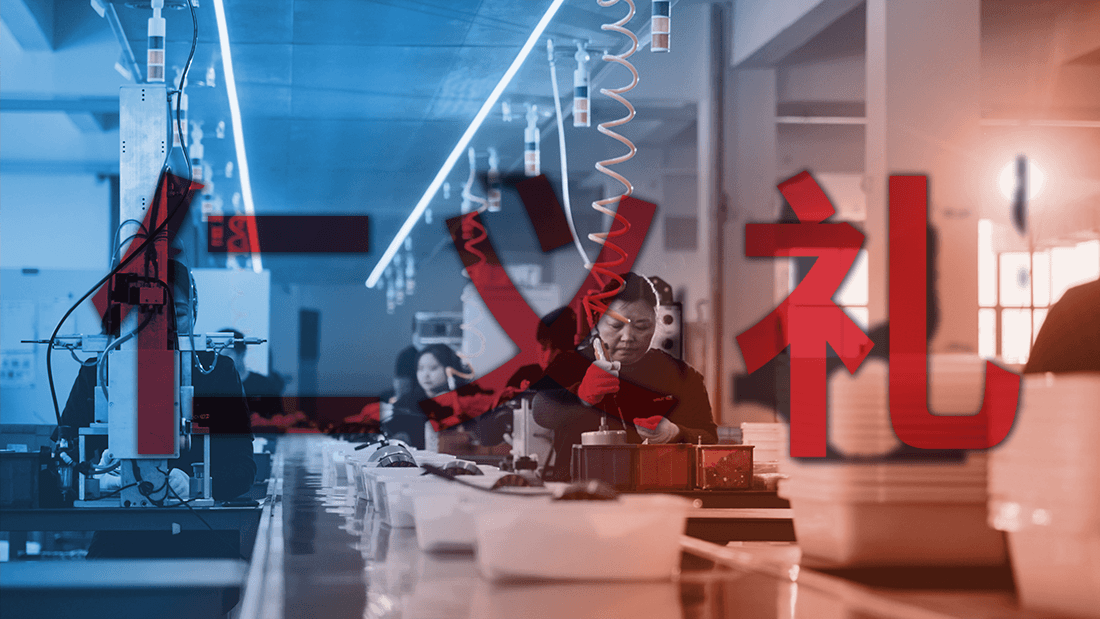
| Yi (义) | Righteousness, justice, conformity to norms | Reliance on authorities (standards, quotes from recognized experts). Even simple actions may be described in terms of "must", "should". |
| Li (礼) | Ritual, proper behavior, hierarchy | Respect for status. Documentation is often built inductively – from specific to general, from examples to rules. Direct criticism or pointing out a user's mistake is considered rude, so it is replaced with roundabout phrases. |
What does this mean for a Western tech writer adapting their help system for China? A direct translation of an English manual with phrases like "Never do X", "Warning: you will lose data" can cause rejection even now – such wording is perceived as aggressive and disrespectful.
A Chinese technical writer would rather write: "For safe operation, it is recommended to avoid action X. Otherwise, interruption of work may occur." The meaning is the same, but the tone is gentler and saves the user's face.
Inductive style: Western documentation is often deductive – it starts with rules, concepts, and an overall scheme. Chinese documentation is the opposite: first specific examples, usage scenarios, then generalizations. This difference leads to Chinese users, accustomed to the inductive style, getting lost in Western manuals and vice versa.
Hidden complexity: cultural principles are not static. Young tech writers who grew up on the internet and work in international companies are increasingly adopting Western directness. In documentation for the global market (Huawei, Alibaba Cloud), you will already encounter direct instructions and warnings. But for the domestic market, the traditional style still dominates. This creates double standards within the same company – a problem that is rarely discussed.

Translation vs. communication: why Western documents still "break"
At first glance, if there are standards and a community, problems should disappear. Yes, but no. Even today, a simple translation of a Western manual into Chinese without deep adaptation often fails.
Problem 1: Untranslatability of cultural concepts
The concept of "fair use" in American law has no exact equivalent in China. A literal translation will confuse the user. A technical writer must not translate but re‑interpret – find local equivalents and explain the difference. This is not taught in translation courses; it is taught in master's programs in technical communication – but there are still too few such specialists.
Problem 2: Different expectations of format
In the West, long PDF manuals are popular. In China, users are accustomed to video tutorials, screencasts, and embedded help. If you upload a 500‑page PDF in English with machine translation to a Chinese website, no one will open it. Even a perfect translation will not help if the format does not meet expectations. Short videos (3‑5 minutes), infographics, interactive tooltips inside the application – that is what works. Chinese giants realized this long ago.
Problem 3: Distrust of non‑Chinese brands
Research shows that Chinese users trust documentation written by local specialists more. A Western name on the title page reduces trust – it seems that the company has not understood local specifics. Even if the documentation follows GB/T standards, a cultural imprint remains.
The scenario where a "just translate" approach works: for narrow technical specialists, engineers who need precise, dry specifications. But for the mass user – no.
Unresolved problems
Even in 2026, some old pains persist. It is useful to know them so as not to harbor illusions.
- Small and medium‑sized businesses lag behind. Giants like Huawei have already switched to professional documentation. But thousands of small and medium‑sized Chinese companies still write instructions "haphazardly". Engineers armed with Photoshop and Word, no budget for a tech writer – this is the reality for the majority.
- Product overload. Chinese interfaces (WeChat, Alipay, DingTalk) remain very complex. A user physically cannot master everything by trial and error. Demand for quality documentation is colossal, but supply still does not meet demand.
- Distrust of official documentation. Chinese people are used to looking for answers on forums, blogs, and WeChat groups. Even if the documentation is well written, the user may not trust it. Companies have to invest in communities and support, which increases total cost of ownership.
- Cultural generation gap. Young tech writers, as mentioned above, are adopting Western directness, while the older generation of customers and managers demand traditional evasiveness. Within companies, there are constant disputes about exactly how to write. This slows down the adoption of unified standards.
What the cases of Huawei, Alibaba, and Baidu show
The major players have been setting trends for many years. Here are a few examples.
Huawei has created its own developer school (Huawei Developer School), where it publishes training videos and manuals for its products. The documentation is translated into dozens of languages and meets international standards. It employs hundreds of technical writers who have been trained in Europe and the United States. At the same time, Huawei actively uses AI to automatically check and adapt style for different markets.
Alibaba Cloud runs the Yunzhong School platform, which aggregates video courses and interactive guides. Alibaba was the first in China to start embedding help directly into the console interface – users see tips at the moment of action without being distracted by a separate document.
Baidu has focused on voice assistants (Duer) and intelligent terminals. The documentation for PaddlePaddle developers is among the best in the world in terms of quality and structure; it is available on GitHub and constantly updated.
These companies have already moved from simple translation to user experience design. They are adopting design thinking, content strategy, and AI. But even they face a shortage of personnel and cultural resistance within the organization.
The future of technical communication in China
Predicting China's development is a hard task.
Full recognition of the profession. National standards are already in place, the community is working, educational programs are growing. By 2030, technical writer will become as common a profession in China as in the US or Germany.
Convergence of cultural styles. Young tech writers working for global companies will finally switch to a universal style close to the Western one. But the domestic market will retain softness and inductiveness for a long time. A clear division will emerge: "documentation for export" and "domestic documentation".
AI and automation. China is actively investing in generative neural networks. Already, drafts of documentation are created automatically, and the tech writer edits and adapts them to the cultural context. This lowers the barrier to entry but raises the requirements for cultural competence.

Video and embedded help will completely replace printed manuals. Chinese users today prefer a 3‑minute video to a 30‑page text. Companies will reallocate budgets toward video production and interactive tooltips.
For Western vendors: entering the Chinese market without localizing documentation is pointless. But localization is not translation. It is rethinking the format, style, tone, and even structure. Hire local technical writers or at least consultants. And be prepared that cultural differences will not disappear, even with standards in place.
Conclusion
The Chinese technical communication industry has come a huge way in 10–15 years. From the complete absence of the profession to national standards, professional communities, and master's programs. Claims that in China "there is no tech writer profession and documentation is written by engineers" are completely outdated as of 2026.
However, cultural principles ("ren", "yi", "li") still shape a softer, more inductive, and more hierarchical style of instructions. A simple translation of Western documentation into Chinese almost always fails. Deep adaptation is needed: change the structure, add illustrations, take into account behavioral patterns (search habits, trust in local brands, preference for video).
Large Chinese companies are already investing in professional tech writer teams and modern formats (embedded help, chatbots, video). But small and medium‑sized businesses, product overload, and distrust of official documentation remain unresolved problems.
For Western vendors entering the Chinese market, it is vital to hire local technical writers or bring in consultants who understand cultural nuances. Without this, even an excellent product will remain misunderstood.
The future belongs to personalized, multimodal documentation: videos for beginners, quick cheat sheets for experienced users, interactive tooltips in the interface. And here China is moving even faster than the West.
Additional resources
- Technical Communication in China (University of Twente study, 2026)
- European Telecommunications Standards Institute – European association for technical communication
- ISO 26511:2018 – standards for technical documentation management