



Published: .
- How agtech documentation differs from enterprise and consumer software docs
- The standards layer, 2026
- Right to repair: the documentation fight that doesn't exist anywhere else
- The shift to digital: apps and QR codes replace the glovebox manual
- Who actually reads this material
- Hidden difficulties
- Three scenarios: when each documentation approach works — and when it fails
- Documentation tools for AgTech: how to choose the right one
- Measuring whether the documentation actually works
- Conclusion
A combine breaks down in an Iowa field in July, right in the middle of harvest. Ten years ago the operator would have called the dealer and waited. Today he opens the John Deere Equipment Mobile app, scans the serial number on the machine, and pulls up the operator's manual for farm machinery, the parts diagram, and a maintenance checklist — all on his phone, no signal required once the page has loaded. Whether he can go further and actually run the diagnostic himself, without a $500 dealer visit, has been the subject of a federal antitrust lawsuit, a ten-year court settlement, and a wave of state legislation that is still moving as this article goes to print.
That tension — between documentation as a courtesy and documentation as a legal battleground — is the defining feature of user documentation for agricultural equipment in 2026. This article looks at how it's built, who reads it, which standards govern it on both sides of the Atlantic, and what a technical writer entering the field should actually expect.
To understand how we got here — and where documentation is heading — it helps to look at what’s driving the change. What follows is a breakdown of the standards, the legal battles, the tools, and the everyday reality of writing for a combine, not a cubicle.
How agtech documentation differs from enterprise and consumer software docs
Agriculture sits at the intersection of heavy machinery, outdoor conditions, embedded software, and — increasingly — a regulatory fight over ownership of information. That combination doesn't exist in quite the same form anywhere else in technical communication. That’s why how to write user documentation for agriculture requires a completely different approach than enterprise or consumer software.
In enterprise software, the reader is at a desk, has a stable connection, and can open the help center whenever it's convenient. In agriculture, the reader is an operator in a cab, a technician under a machine, or an agronomist standing in a field with one hand on a tablet and the other on a soil probe. Nobody is going to read a 300-page PDF in that setting. They need the one paragraph that tells them what alarm code E402 means, right now.
The regulatory layer is also heavier and more explicit than in most IT documentation, and — this is the part that's specific to the West — it is actively contested. In the EU, the content and format of machinery instructions is set by regulation. In the US, the content is shaped less by a single law than by a patchwork of voluntary industry standards, product-liability case law, and a right-to-repair movement that has forced manufacturers to publish material they spent two decades keeping behind a dealer login.
A agricultural technical writer guide needs to know:
- how the equipment and the embedded software actually work;
- which standard applies to which document, and in which country;
- what "the reader might sue us" means for how a warning is worded;
- how to structure content so it survives a scan-in-the-field use case, not just a desktop one.
The standards layer, 2026
There isn't one rulebook. There are three overlapping ones, and a technical writer working across the US and EU markets has to satisfy all three at once — which makes regulatory compliance for ag machinery docs a critical skill. Agricultural documentation standards differ significantly between the US and the EU.
1. IEC/IEEE 82079-1 — the base standard almost nobody outside the industry has heard of
IEC/IEEE 82079-1:2019, Preparation of information for use (instructions for use) of products, is the closest thing the industry has to a universal foundation. It's jointly issued by IEC, IEEE and ISO, and it applies to everything from a tin of paint to a combine harvester — it sets the general principles for how instructions should be structured, written and delivered, without dictating the content of any specific product category. Most product-specific standards, including the machinery ones below, point back to it.

2. The ISO machinery family — the content layer
Two ISO standards do the heavy lifting for agricultural equipment specifically:
- ISO 20607 for agricultural machinery sets requirements for the safety-related content of a machinery instruction handbook — the warnings, the residual-risk disclosures, the structure a manual needs before it can be called complete from a safety standpoint.
- ISO 3600:2022 is the one written specifically for tractors and agricultural and forestry machinery. It defines the content and format of the operator's manual: what sections it needs, how illustrations should relate to text, how warnings should be laid out. It's recommendatory rather than mandatory, but manufacturers who ignore it make life much harder for themselves when they try to sell into a market that expects it.
3. The regional layers — where the US and EU actually diverge
This is where "Western" documentation stops being one thing and splits into two systems.
In the European Union, the operative document is the Machinery Regulation (EU) 2023/1230, which replaces the Machinery Directive 2006/42/EC and becomes fully binding across all member states on 20 January 2027. Unlike a directive, a regulation applies directly — no national transposition, no room for a country to interpret it differently. The headline change for documentation teams: instructions for use can now be digital by default. Paper is only mandatory if the buyer specifically asks for it, or if the machine is intended for non-professional users, in which case at least the core safety information still has to ship on paper. The EU Machinery Regulation 2023/1230 documentation framework also folds in new requirements around cybersecurity and software integrity for connected and partially autonomous machinery — a category that increasingly includes autonomous tractors and robotic implements.
In the United States, there is no single machinery-instructions law. Instead, the framework is built out of American National Standards:
- ANSI Z535, administered by NEMA, is the country's de facto standard for safety communication in agriculture. Z535.4 covers product safety labels — the decals bolted to the machine itself. Z535.6 covers safety information inside product manuals and other collateral material. Z535.7 extends the same logic to electronic media — apps, help centers, in-product alerts. OSHA doesn't write these standards, but it treats them as the accepted best practice, which in a liability dispute is nearly as good as a legal requirement.
- ANSI/ASABE standards fill in the agriculture-specific detail: safety signs and hazard pictorials for equipment are covered by ANSI/ASABE AD11684 (an adopted, US-modified version of ISO 11684, which itself grew out of the older ASAE S441). A less formal but frequently cited engineering practice, ASAE EP363.1, Technical Publications for Agricultural Equipment, gives manufacturers content and formatting guidance for operator's manuals specifically — and it shows up regularly as a benchmark in product-liability litigation, where an incomplete or poorly organized manual can be used as evidence that a manufacturer didn't take safety seriously.
The practical upshot: a manual built for the EU market and a manual built for the US market are not the same document with a translated cover page. They answer to different regulators, cite different standards, and in the US case, the manual itself can end up as an exhibit in court.
Right to repair: the documentation fight that doesn't exist anywhere else
Nowhere else in technical communication has a document access question turned into federal antitrust litigation quite the way it has in American agriculture, and any article claiming to describe "Western" ag documentation that skips this is missing the biggest story in the field.
The short version: manufacturers spent years keeping full diagnostic software, reprogramming tools, and right to repair documentation behind an authorized-dealer login, while publishing only a stripped-down operator's manual to end users. The farm equipment repair documentation was effectively gated, and farmers argued that withholding it — not just the tools — was the actual chokepoint.
The timeline that matters for 2026:
- 2023 — Colorado becomes the first US state to pass a right-to-repair law specifically covering agricultural equipment. The same year, John Deere and, separately, CNH Industrial's Case IH and New Holland brands sign voluntary memoranda of understanding with the American Farm Bureau Federation, promising broader access to manuals, diagnostic tools and parts information. Critics note these MOUs are not legally binding.
- January 2025 — the Federal Trade Commission and several state attorneys general sue John Deere, alleging the company unlawfully maintained a repair-services monopoly by withholding software tools and documentation from farmers and independent technicians.
- February 2026 — Iowa's House Agriculture Committee advances its own right-to-repair bill; by mid-2026, sixteen state-level agricultural right-to-repair bills have been filed across the country.
- July 2026 — the FTC and five states reach a ten-year settlement with Deere & Company. Under its terms, Deere must give farmers and independent repair providers the same repair resources — including software capabilities — that its authorized dealers get. A specific, dated commitment: by December 31, 2026, Deere has to enable offline reprogramming and diagnostics through its Operations Center PRO Service platform, with full customer access triggered once the tools are rolled out to more than half of its authorized dealer network.
For a documentation team, this isn't background noise — it's a structural change to the job. Manuals and diagnostic guides that were written for a narrow, trained, dealer-only audience now have to work for a much wider and less predictable reader: a farmer troubleshooting an ECU fault at 9 p.m. with a laptop and no formal training. Content that used to be gated is becoming public, and it has to be rewritten for that reader, not just re-published.
The shift to digital: apps and QR codes replace the glovebox manual
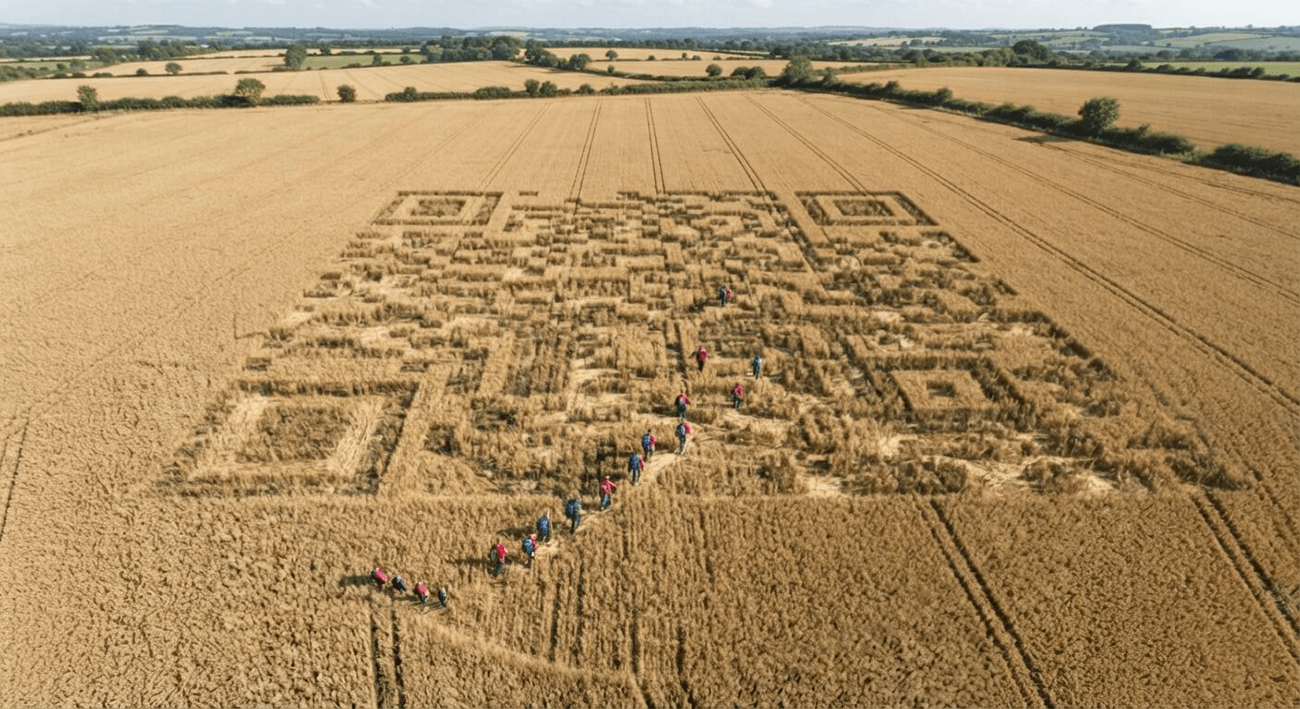
Even before regulation forced the issue, the economics were already pushing manufacturers off paper. Printing and storing thick multilingual manuals across a global dealer network is expensive, and most operators would rather scan a code than dig through a glovebox.
John Deere's Equipment Mobile app is the clearest example of where the industry has landed: scan the serial number on any piece of equipment — Deere's own or a competitor's — and get the operator's manual, exploded parts diagrams, and hour-based maintenance checklists, plus a direct line to order the part. It's free, it doesn't require a dealer relationship to use for lookup, and it's explicitly built for a phone in a shop, not a desktop in an office.
Case IH's Electronic Service Tool (EST), offered through its self-repair program, plays a similar role on the CNH Industrial side, pairing technical manuals with the same diagnostic software the brand's own technicians use — a direct product of the right-to-repair pressure described above.
Outside North America, PONSSE, the Finnish forestry-equipment manufacturer, built its Active Manual mobile app specifically to work offline in the woods, where cellular coverage is often nonexistent — a useful reminder that "digital" and "connected" are not the same requirement, and that a documentation architecture built only for a data connection will fail exactly where agricultural and forestry users actually work.
Precision-ag software adds a second, parallel documentation track. Platforms like John Deere Operations Center, Trimble Ag Software, and Climate FieldView increasingly build help directly into the interface — contextual tooltips, in-app walkthroughs, and searchable knowledge bases — rather than shipping a separate PDF guide. For a technical writer, this means the deliverable is as often a piece of UI copy or an embedded help panel as it is a standalone document.
Who actually reads this material
The audience for agricultural documentation in the US and EU breaks down along lines that will be familiar to anyone who has written for the sector anywhere:
- The operator — running the tractor, combine, or sprayer. Needs fast, procedural answers that are often found in field service manuals for tractors: what to check when a warning light comes on, how to calibrate a planter for a specific seed, what the safe transport speed is for a given implement. Increasingly reads on a phone, via a QR code on the machine itself.
- The agronomist — working inside the precision-ag software layer: variable-rate application maps, yield data, soil sampling records. Needs software documentation with an agronomic vocabulary, not a generic SaaS help center.
- The independent repair technician — a category whose documentation needs have expanded dramatically because of right to repair. This reader needs service-level content that used to be restricted to authorized dealers: wiring diagrams, torque specs, diagnostic trouble codes, calibration procedures.
- The fleet or service manager, often at a large operation or a dealership, who needs maintenance scheduling data and warranty documentation across a mixed fleet of brands and vintages.
The throughline, as in any agricultural market: one person often plays two or three of these roles at once, and the documentation has to be legible to someone with deep hands-on equipment knowledge but no formal IT or engineering background.
Hidden difficulties
The gap between engineering and documentation
Software engineers building the precision-ag platform rarely understand how the machine behaves in a field; mechanical engineers rarely understand the software stack. The technical writer sits in the middle, translating between two worlds — while still needing the finished manual to satisfy ISO 20607 or ANSI Z535.6, not just internal engineering conventions.
Equipment variant explosion
A single tractor model can ship with dozens of engine, transmission, and attachment combinations. Trying to maintain a separate manual per variant is unsustainable; the two techniques that actually work are the same ones used across the industry globally:
- Modularity — splitting the document into independent blocks (a shared core plus swappable modules for each attachment or configuration), so that changing one option only touches one module. This is the essence of modular documentation for agricultural equipment.
- Conditional content — tagging content so the same source produces the right manual for the right configuration automatically. Tools like MadCap Flare and Paligo build this in as a first-class feature — a perfect example of conditional content for farm manuals.
Manufacturers that adopt both consistently report cutting update workload by roughly 60–80% compared with hand-editing a full document for every change, and it materially reduces the risk of an outdated instruction shipping with a machine.
Update velocity versus regulatory formatting
Firmware for a bortware computer or a precision-ag platform can update several times a year; the manual has to keep pace without breaking the structural requirements ISO 20607 or Z535.6 expect. Agile release cycles and standards-compliant documentation pull in opposite directions, and reconciling them is a permanent, not one-time, problem.
Localization is not optional, and it's not just Spanish-French-German
US agricultural documentation increasingly needs Spanish alongside English, given the size of the Spanish-speaking agricultural workforce, and warnings have to translate with the exact same safety meaning, not just the same words. In the EU, the Machinery Regulation requires instructions in the official language(s) of every member state where the machine is actually placed on the market — which for a manufacturer selling across a dozen countries means a dozen simultaneously maintained translations, all tied to the same source content.
Offline access
Fields, forests, and grain elevators are dead zones — which makes offline documentation for field use a critical requirement. Three approaches actually hold up in practice: a static HTML site packaged into a WebView-based mobile app (PONSSE's approach); PDF as a lightweight fallback, accepted as second-best because it can't support search; and a progressive web app that caches content on first load and syncs automatically once a connection returns. The rule that matters most: sync has to happen in the background, without asking the user to do anything.
Liability, not just cost
In most industries, a bad manual is a support-ticket problem. In US agricultural equipment, it can become a courtroom exhibit — which means liability in agricultural user manuals is a real, everyday concern for technical writers. Product-liability litigation involving farm equipment routinely turns on whether the manual conformed to ASAE EP363.1 or ANSI Z535.6 — an engineer or safety expert can be asked to testify on exactly that point. That risk changes how a technical writer approaches every warning label: not just "will the reader understand this," but "will this hold up if a lawyer reads it after an accident."
Three scenarios: when each documentation approach works — and when it fails
A US row-crop equipment manufacturer facing right to repair
Documentation that was written for trained dealer technicians now needs to serve independent shops and farmers directly, on a legal deadline. What works: publishing a genuinely complete service manual rather than a redacted one, and writing diagnostic procedures for a reader who is skilled with machinery but new to the company's specific software. What fails: treating the newly public material as an afterthought, formatted for internal use and dumped online to check a compliance box — that approach draws exactly the kind of regulatory scrutiny the settlement was meant to end.
A precision-ag software company
In-app help and searchable precision agriculture software documentation get support tickets answered fast, and updates ship in sync with software releases. It fails when nobody plans for the user in a field with no signal, or builds video content assuming a fast connection and a large screen — increasingly, that user has neither.
A European OEM preparing for the January 2027 Machinery Regulation deadline
A unified digital-first document set, with a clear access point (QR code or app) and full multilingual coverage, lets the manufacturer update instructions without a reprint cycle. It fails if the content isn't structured for fast lookup, if there's no offline path, or if the digital access point isn't genuinely mobile-friendly — a QR code that opens a desktop-only PDF isn't compliance, it's a workaround waiting to be flagged.
Documentation tools for AgTech: how to choose the right one
The category breaks down the same way it does anywhere else in technical communication, with the caveat that agtech documentation best practices push teams toward heavier tooling sooner than in most industries because of variant complexity and liability exposure. Help authoring tools for agtech need to handle this complexity effectively.
- Dedicated help-authoring tools — MadCap Flare, RoboHelp, Paligo — handle structured documentation with multi-format publishing (PDF, HTML5, CHM-equivalent web help) and, critically, conditional content for variant management. They're expensive and have a real learning curve.
- Lighter-weight documentation platforms — Document360, Confluence — work well for smaller product lines or internal documentation, but external, safety-critical manuals for regulated equipment usually outgrow them quickly.
- Custom-built systems, integrated with a company's own telematics and mobile apps, are the most flexible and the most expensive option — the approach large OEMs increasingly take once their in-app help and diagnostic tooling need to talk to the same backend as the documentation.
Three questions actually decide the choice, instead of a generic recommendation:
- Budget and team experience. Limited budget, no HAT-experienced writer on staff — start with Document360 or Confluence, and add structure by hand rather than paying for conditional-content tooling you won't use.
- Equipment complexity. Dozens of configurations demand conditional content; a simple product line doesn't need it.
- Mobility and offline requirements. If the documentation has to work in a field or a forest with no signal, the tool needs a genuine offline export path — a PWA build or a WebView-packaged mobile app — not just a responsive website.
Measuring whether the documentation actually works
Page count has never told anyone anything useful. Five metrics do:
- Share of support calls covered by existing documentation. Above roughly 20% of inbound calls asking something the manual already answers, the structure or language needs a rework, not just an update.
- Average time to find an answer. Tracked through in-app or web analytics; under 30 seconds for a routine task is a reasonable target.
- Bounce rate on documentation pages. A reader leaving within ten seconds usually means the heading or summary didn't match what they were actually looking for.
- Update frequency. Once a year signals content drifting out of sync with the product; every week signals an unstable product, not a documentation problem. The healthy cadence tracks the release cycle.
- Direct user feedback. A simple "Did this answer your question?" prompt is unglamorous and still the most reliable signal available.
Review these quarterly. A metric moving in the wrong direction is a trigger to revisit the content, not just a number for a slide.
Conclusion
User documentation for agricultural equipment in 2026 is no longer a static manual in a glovebox — it's a digital product with its own legal exposure, its own regulatory deadline, and, in the US specifically, its own antitrust history. The EU's Machinery Regulation makes digital-by-default instructions mandatory from January 20, 2027. The US has no equivalent single law, but the combination of ANSI Z535, ASABE engineering practice, product-liability litigation, and — above all — the John Deere settlement has pushed the industry toward the same destination from a different direction: fuller, more accessible, more legally consequential documentation than the industry has ever had to produce before.
Writing for this space means understanding tractors and software at the same time, tracking standards on two continents, and accepting that a poorly worded warning isn't just a UX problem — it might end up in front of a judge. It's a genuinely hard niche, and it pays accordingly: agricultural technical writers in the US average around $39 an hour (roughly $60,000–$98,000 a year depending on experience and employer), broadly in line with technical writing salaries generally; in Germany, general technical-writing roles average in the €50,000–€70,000 range, though agriculture-specific data is harder to isolate given how small and specialized the field still is.
If you're a technical writer weighing whether to move into agtech, consider this: how to write user documentation for agriculture and precision agriculture software documentation are skills that are increasingly in demand — and the work is unusually demanding and consequential. A document you write can be the difference between a farmer fixing their own tractor at midnight during harvest, or losing a week waiting on a dealer. Few corners of technical communication offer stakes that direct.